
Asia Expansion: Prioritising an Increasing Set of Options

Executive Takeaways
• Asia remains one of the most compelling regions for international expansion, driven by strong economic growth, a rapidly expanding middle class, and accelerating digital adoption across markets.
• However, Asia is not a single market. Companies that treat the region as a unified opportunity often underestimate regulatory complexity, channel fragmentation, and competitive dynamics.
• Successful expansion depends on prioritisation—identifying the right markets, channels, and sequencing strategy through a structured Asia roadmap rather than attempting broad entry across multiple countries simultaneously.
Strategic Context: Asia’s Expanding Opportunity
For global companies considering international expansion, Asia continues to represent one of the most attractive growth regions. The region’s economic momentum, demographic scale, and rapidly evolving consumer markets create significant opportunities for brands seeking long-term growth.
Asia currently accounts for a substantial share of global economic growth, with major economies such as China and India driving demand across multiple sectors. At the same time, emerging markets across Southeast Asia—including Vietnam, Indonesia, and Thailand—are becoming increasingly attractive destinations for foreign brands due to expanding consumer spending and improving infrastructure.
A key driver of this growth is the expansion of Asia’s middle class. Rising incomes across urban populations are fueling demand for higher-quality products, international brands, and premium consumer goods. As disposable income continues to increase, companies entering the region gain access to a vast and growing customer base.
Technological innovation also plays a critical role in shaping Asia’s economic landscape. Countries such as Japan, South Korea, and Singapore remain global leaders in technological development, while Southeast Asian markets are experiencing rapid growth in digital commerce. E-commerce platforms and mobile payment ecosystems have transformed how consumers interact with brands, creating new pathways for market entry.
Additionally, Asia’s strategic position within global trade networks further strengthens its attractiveness for expansion. Major logistics hubs and regional trade agreements facilitate cross-border commerce and enable companies to build efficient supply chains across multiple markets.
Despite these opportunities, expansion into Asia requires careful planning. The diversity of markets, regulatory environments, and distribution systems means companies must approach the region with a clear prioritisation strategy rather than a broad, one-size-fits-all approach.

The Common Mistake Leaders Make
One of the most common mistakes companies make when expanding into Asia is attempting to enter too many markets simultaneously.
While the region offers numerous opportunities, each country presents distinct regulatory requirements, distribution channels, and consumer behaviors. Treating Asia as a single market often leads to operational complexity, slower market entry, and higher execution risk.
Another challenge lies in channel fragmentation. In many Asian markets, companies must navigate a combination of traditional retail, modern trade, and rapidly expanding e-commerce platforms. Managing these channels effectively requires both local knowledge and a clear go-to-market strategy.
Pricing pressures also present challenges. Rising raw material costs, packaging expenses, and inflationary conditions can significantly impact profitability. At the same time, local competitors and private-label brands often compete aggressively on price, forcing international companies to carefully balance competitiveness with margin protection.
Regulatory complexity adds another layer of difficulty. Product standards, labeling requirements, and import regulations vary widely across Asian countries. Companies that underestimate the time required to navigate these frameworks often face delays during market entry.
In practice, the challenge is not simply entering Asia—it is determining where to start and how to sequence expansion effectively.
What Good Looks Like: The Asia Expansion Roadmap
Companies that successfully expand into Asia typically adopt a structured approach that prioritises markets based on strategic fit rather than pursuing multiple opportunities simultaneously.
A practical expansion roadmap often includes the following steps:
1. Market Prioritisation
Identify which countries offer the strongest combination of market demand, regulatory feasibility, and distribution readiness.
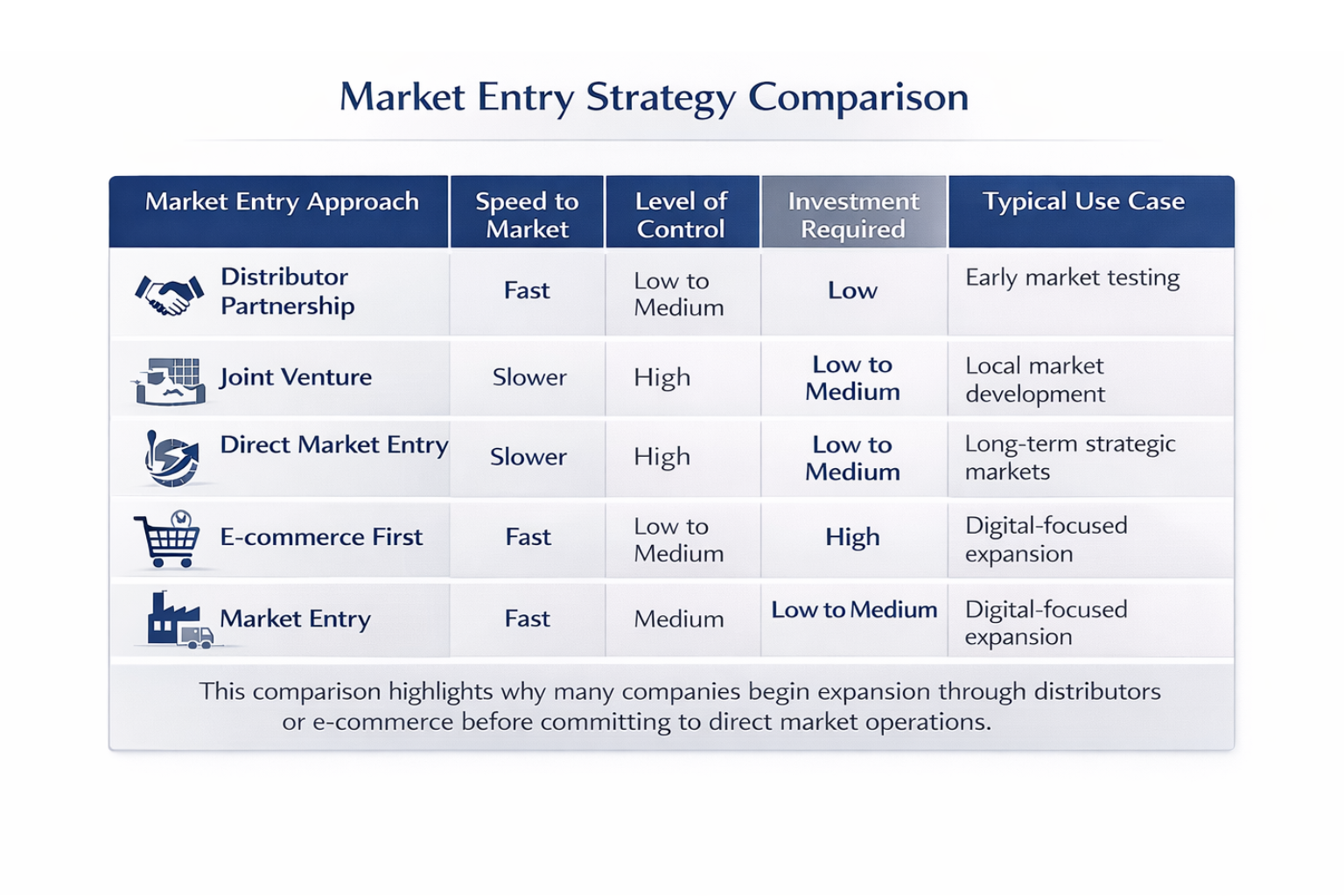
2. Channel Strategy
Determine whether market entry should begin through distributors, retail partnerships, or digital channels.
3. Regulatory Readiness
Assess regulatory requirements early to prevent delays in product approvals or compliance processes.
4. Partner Selection
Establish relationships with local distributors, retailers, or operational partners who understand regional market dynamics.
5. Expansion Sequencing
Plan market entry in phases—beginning with one or two priority markets before expanding into additional countries.
This structured approach allows companies to allocate resources efficiently while building operational knowledge across markets.
In Practice: What We See on the Ground
In practice, many companies entering Asia initially underestimate the importance of market sequencing.
For example, a European FMCG brand entering Southeast Asia initially planned to launch simultaneously across five markets. Regulatory approvals, distribution negotiations, and pricing adjustments quickly created operational complexity, delaying launch timelines.
After reassessing their strategy, the company prioritised two markets where regulatory requirements and distribution channels were clearer. This phased approach allowed them to establish brand presence, refine pricing strategies, and build operational experience before expanding into additional countries.
The result was faster market traction and a more sustainable expansion strategy.
Closing Insight
Asia continues to offer one of the most dynamic opportunities for international expansion. However, success in the region rarely comes from rapid, large-scale entry.
Instead, companies that prioritise carefully—selecting the right markets, sequencing expansion, and building strong local partnerships—are best positioned to capture the long-term growth the region offers.
Subscribe to Samana Insights to receive future issues and strategic perspectives on international expansion, market entry strategy, and regional growth opportunities.

Effective Go-to-Market Strategies for Emerging Markets
Expanding into new markets isn’t just about choosing the right country — it’s about selecting the right channels and partnerships. E-commerce, distributors, and retail all require different approaches depending on the market.

Quick Tip: How to Choose the Right Local Partner
When entering new markets, the wrong partner can slow growth or create risk. Use a structured partner evaluation scorecard to assess:
Experience & capabilities
Regulatory knowledge
Distribution network
Cultural fit

Advisory Advantage – Structured Expansion Made Simple
Samana Advisory helps companies design structured international expansion strategies, including:
Market prioritisation
Partner selection
Regulatory assessment
Go-to-market strategy
